How to Choose Reliable Wholesale Childrens Wear Suppliers
Finding reliable Wholesale Childrens Wear suppliers is essential for retailers, boutiques, online stores, and private-label brands. The right supplier can help you maintain consistent quality, control costs, and respond quickly to changing children's fashion trends.

However, choosing a supplier involves more than comparing wholesale prices. You should evaluate product variety, quality standards, minimum order quantities, customization options, shipping capabilities, and customer service before making a long-term decision.
1. Check the Supplier's Product Range
A reliable supplier should offer enough variety to support your children's clothing business as it grows. Look for suppliers covering everyday clothing, seasonal collections, accessories, and complementary products.
For example, retailers may need:
Tops, T-shirts, shirts, and sweaters
Pants, shorts, skirts, and leggings
Baby clothing and rompers
Dresses for different occasions
Matching outfits and coordinated sets
Children's bags and backpacks
Fashion accessories and toys
A broad catalog allows retailers to test different products without managing too many suppliers.
For businesses looking for a broad selection, FashionTIY provides a dedicated Wholesale Childrens Wear category covering different children's clothing styles and product types.
2. Evaluate Product Quality Carefully
Price is important, but quality directly affects customer satisfaction and repeat purchases.
When evaluating wholesale childrens wear suppliers, pay attention to:
Fabric quality and durability
Stitching and finishing
Color consistency
Size accuracy
Button and zipper quality
Comfort and breathability
Packaging condition
If possible, order samples before purchasing large quantities. Sampling gives you a practical way to assess whether the supplier's products match your store's standards.
3. Compare Wholesale Prices and MOQs
Wholesale pricing should leave enough room for your retail markup while maintaining reasonable product quality.
However, the lowest price is not always the best deal. Consider the total sourcing cost, including:
Product price
Minimum order quantity
Customization costs
Packaging fees
Shipping expenses
Potential import-related costs
Flexible MOQs can also be valuable for smaller boutiques. They allow businesses to test new designs before committing significant capital to inventory.
4. Look for Trend-Friendly Kids Outfit Options
Children's fashion changes with seasons, holidays, school schedules, and social trends. Suppliers should therefore provide styles that can keep your inventory fresh.
Matching outfits are particularly useful for retailers because coordinated pieces can simplify merchandising and encourage customers to purchase complete looks.
FashionTIY offers Bulk Kids Outfit Sets, giving retailers access to coordinated children's clothing suitable for different occasions and customer preferences.
5. Consider Age and Product Segmentation
A strong children's clothing supplier should make it easy to source products for different age groups.
Baby and toddler collections may require different fabrics, proportions, and designs than clothing for older children. Product segmentation can help retailers build a more organized inventory.
For younger customers, Wholesale Kids Rompers can provide practical options for everyday baby and toddler collections.
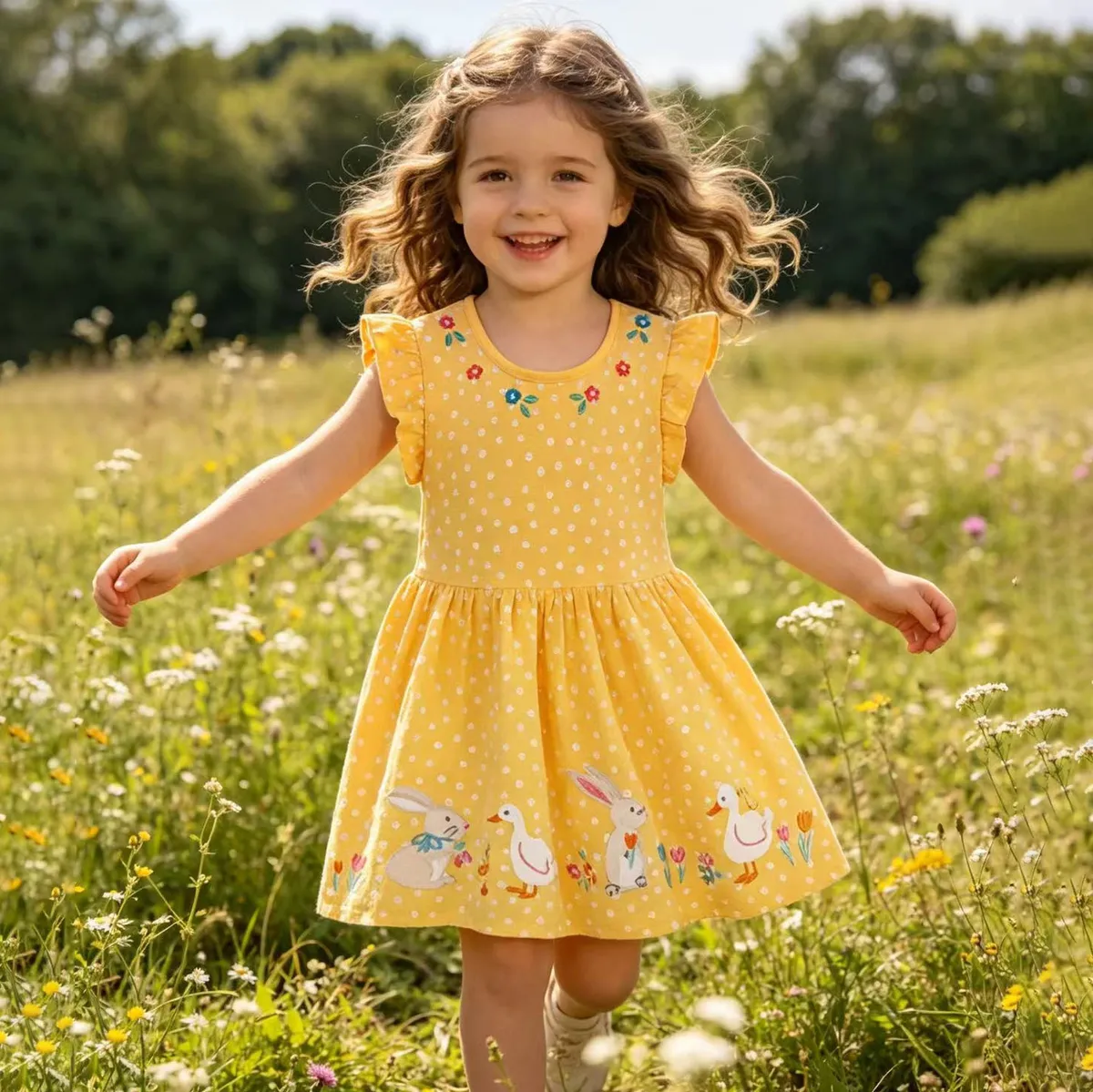
Retailers serving girls can also expand their seasonal selection with Bulk Girls Dresses, including styles suitable for casual wear, parties, and special occasions.
6. Check Accessories and Complementary Products
Clothing does not have to be the only category in your children's store. Complementary products can increase average order value and create complete shopping experiences.
Depending on your business model, consider adding:
Hair accessories
Children's jewelry
Hats and caps
Socks
Small bags
Backpacks
Toys
Seasonal accessories
FashionTIY also provides Wholesale Kids Decor, helping retailers source children's accessories alongside their apparel inventory.
For stores that want to expand their bag selection, Bulk Kids Bags can complement children's clothing collections and provide additional merchandising opportunities.
7. Consider School and Seasonal Demand
Back-to-school shopping creates a major opportunity for children's retailers. Parents often purchase clothing, backpacks, accessories, and other school-related products at the same time.
When planning inventory, consider products such as:
School backpacks
Casual children's clothing
Jackets and sweaters
Sportswear
Lunch accessories
Seasonal footwear
For retailers preparing for school-season demand, Bulk Backpacks for School can complement children's apparel collections.
Planning these products several weeks or months ahead can help reduce last-minute sourcing pressure.
8. Review Customization Capabilities
If you operate a private-label children's brand, standard wholesale products may not be enough. You may need customized colors, labels, packaging, prints, or other product details.
Before choosing a supplier, ask about:
Private-label services
Custom labels
Custom packaging
Logo printing
Product customization
Sample development
Minimum quantities for custom orders
A supplier with customization capabilities can make it easier to develop a recognizable children's brand rather than competing solely on price.
9. Examine Communication and Customer Service
Good communication can prevent many sourcing problems.
A reliable supplier should respond clearly about product specifications, pricing, availability, production schedules, and shipping arrangements.
Before placing a large order, test the supplier's communication by asking several practical questions. Pay attention to response speed, accuracy, and willingness to resolve potential issues.
Strong communication is especially important when ordering customized products or managing seasonal inventory.
10. Check Shipping and Fulfillment Options
Shipping can significantly influence your final product cost and inventory planning.
Before selecting a wholesale childrens wear supplier, clarify:
Available shipping methods
Estimated delivery times
Order tracking
Shipping destinations
Packaging procedures
Handling of damaged products
Return or replacement policies
A supplier with dependable fulfillment can help retailers maintain inventory availability and avoid unnecessary delays.
11. Explore Related Children's Products
Expanding your product range can help your store appeal to parents looking for one-stop shopping.
For example, a children's boutique could combine apparel with toys, accessories, and seasonal products. This strategy can also help retailers create themed collections around birthdays, holidays, school seasons, or special events.
Retailers interested in expanding beyond clothing can explore Bulk Toys Wholesale as another category for children's merchandise.
12. Build a Supplier Evaluation Checklist
Before committing to a supplier, compare several important factors instead of focusing on price alone.
Evaluation Factor | What to Check |
Product Quality | Materials, stitching, sizing, and finishing |
Product Range | Clothing, sets, dresses, rompers, and accessories |
Pricing | Wholesale prices and overall sourcing costs |
MOQ | Flexibility for small and large orders |
Customization | Labels, packaging, logos, and product details |
Shipping | Delivery times, tracking, and destinations |
Customer Service | Communication and problem resolution |
Scalability | Ability to support growing order volumes |
This comparison makes it easier to identify suppliers that fit your specific business model.
Why Consider FashionTIY for Wholesale Children's Fashion?
For retailers searching for a broad sourcing solution, FashionTIY combines children's apparel with related categories in one marketplace.
Its selection includes children's clothing, outfit sets, rompers, dresses, accessories, bags, school backpacks, and toys. This variety can help retailers simplify sourcing while testing different product categories.
For small boutiques, online sellers, and growing children's fashion brands, having multiple product categories available through one supplier can make inventory planning more efficient.
Choosing reliable Wholesale Childrens Wear suppliers requires a balance between price, quality, product variety, flexibility, and service. Do not select a supplier based solely on low wholesale prices.
Instead, evaluate samples, compare MOQs, review shipping policies, assess customization options, and consider whether the supplier can support your long-term growth.
A well-chosen supplier can help you build a diverse children's collection, respond to seasonal demand, and create a stronger retail experience for parents and young shoppers.


Comments
Post a Comment